Run Local LLM on your Mac
Choose from Qwen, Gemma, Llama and 1,000+ more models and run them on your Mac with Apple Silicon and MLX optimization.
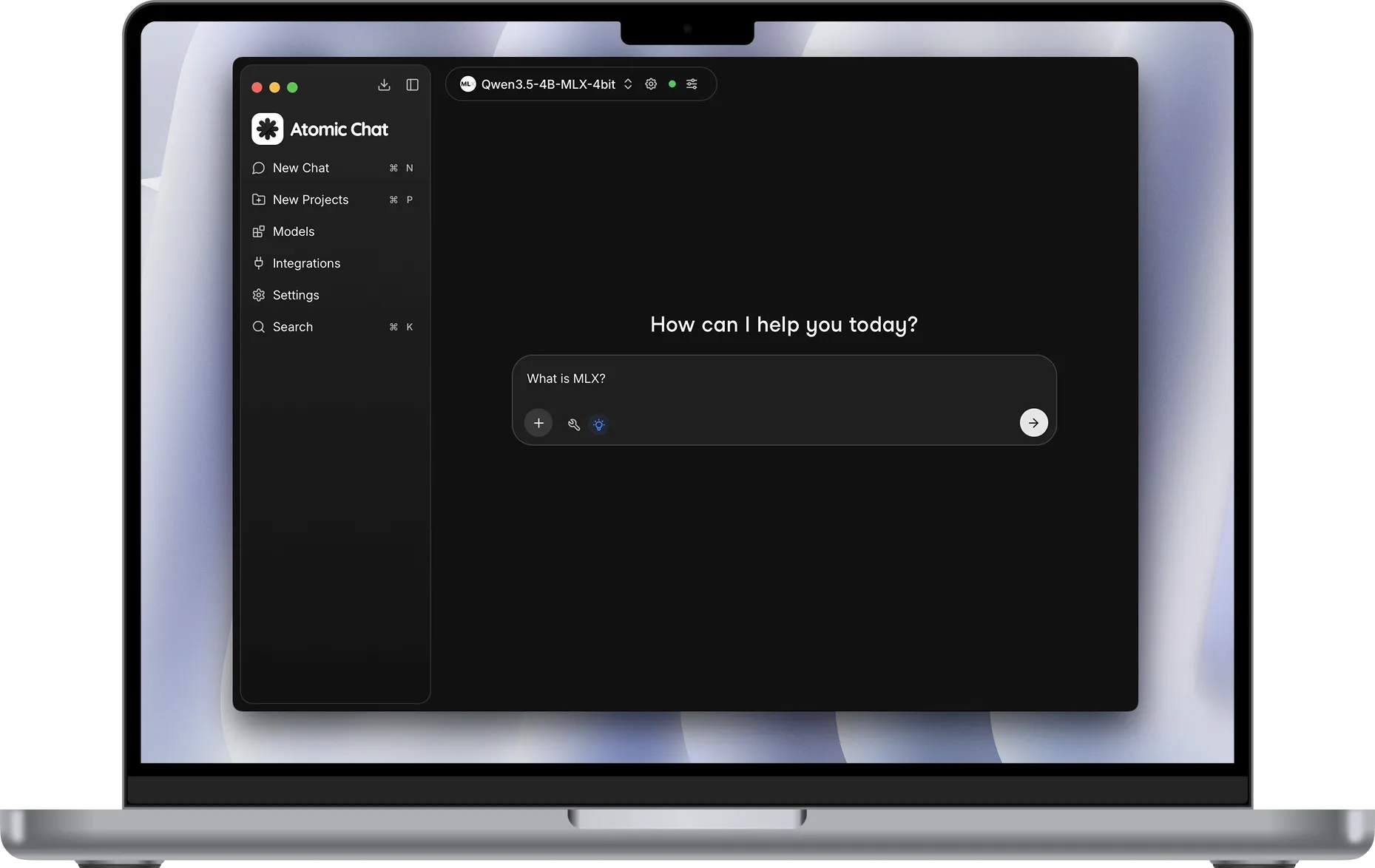


What you need to run a local LLM on Mac
Apple Silicon is the fastest, and your memory decides how big a model fits. An M1 chip with 16GB already runs an 8B model at reading speed.
How to run an LLM on your Mac
Three steps and about ten minutes, most of which is the model downloading.
Download the app
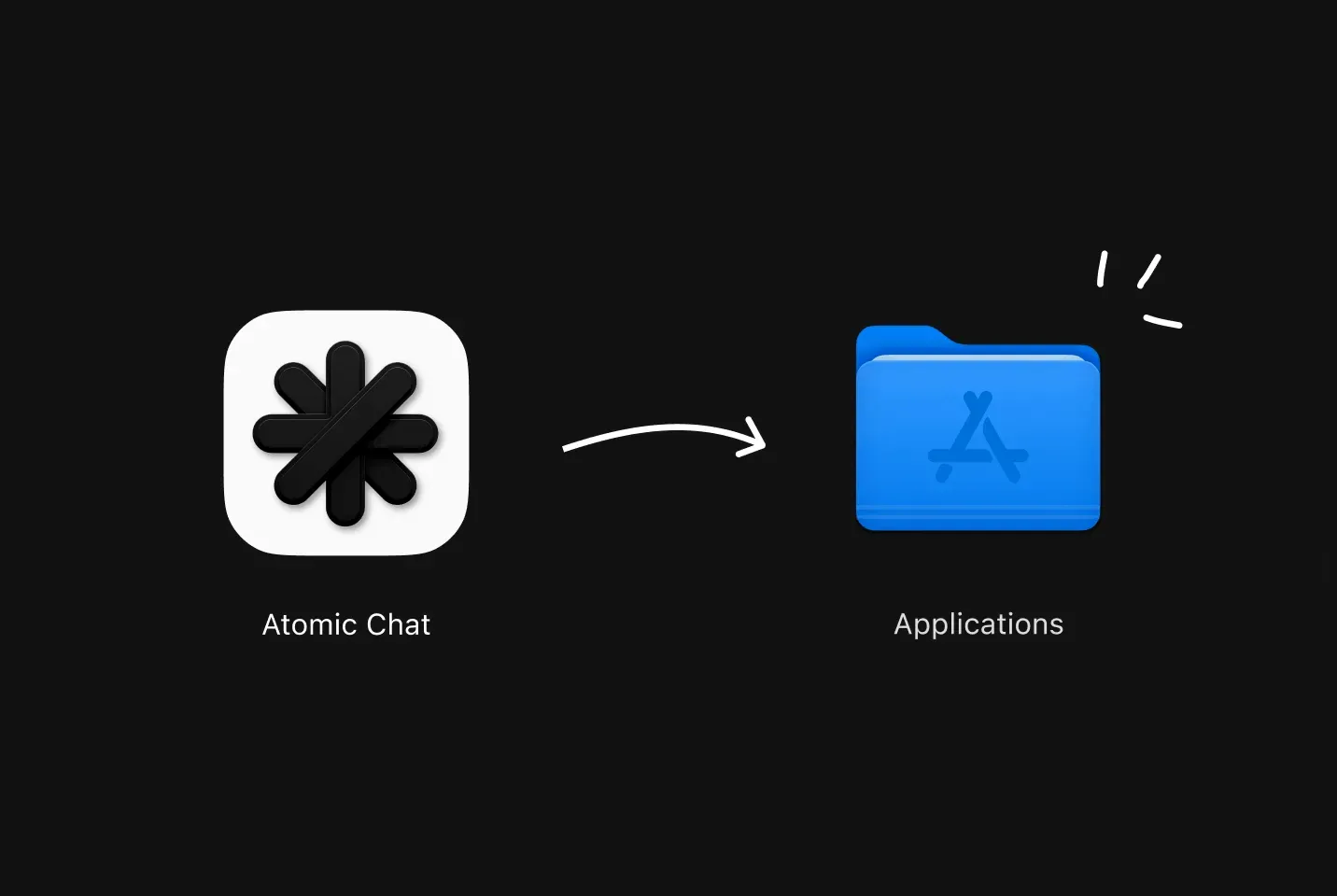
One universal installer supports Intel and Apple Silicon Macs running macOS 13.6 or newer. Drag Atomic Chat to Applications and open it.
Pick a model
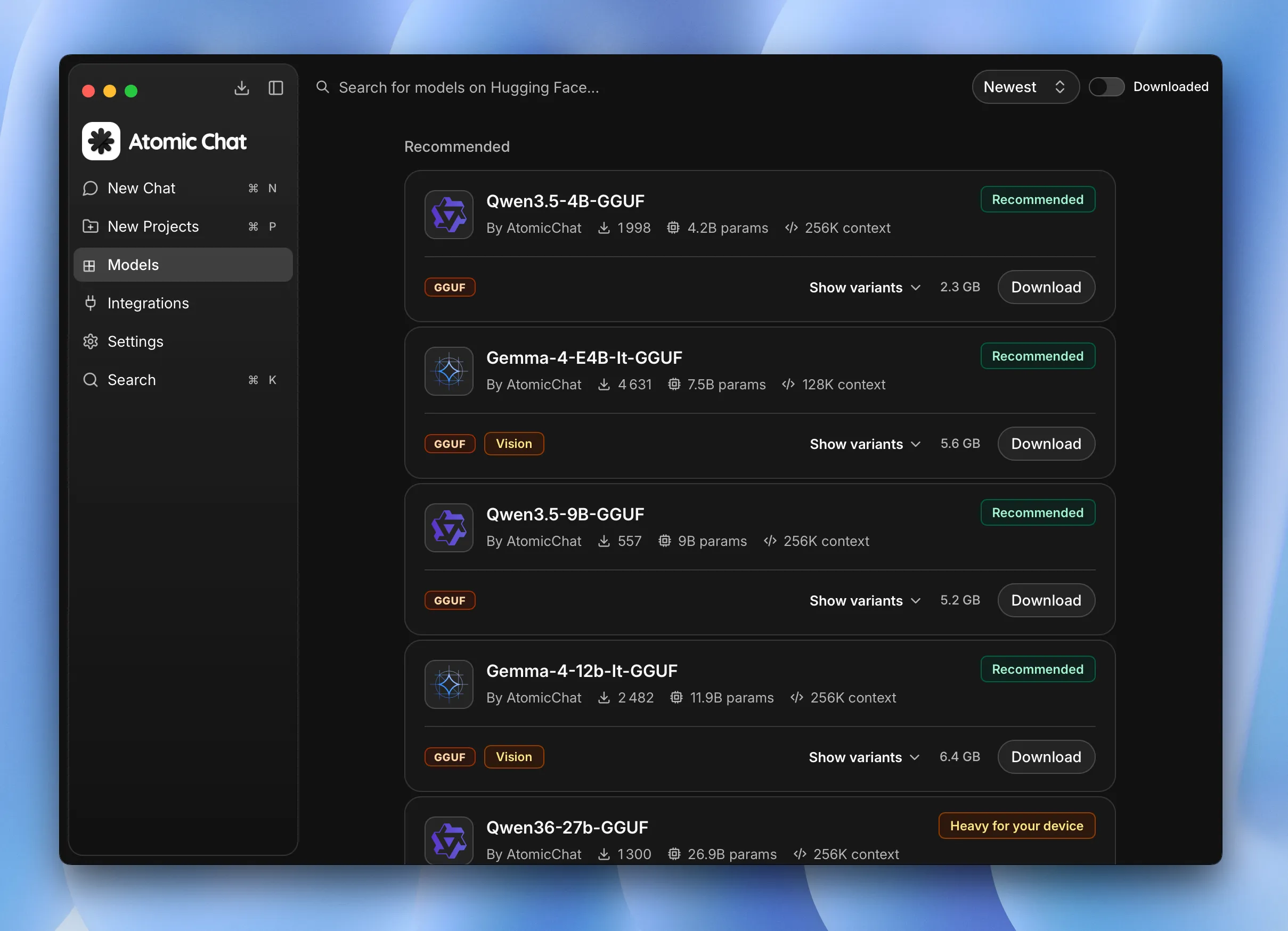
Browse 1,000+ open models and take one that fits your memory. The download is 1 click.
Start chatting
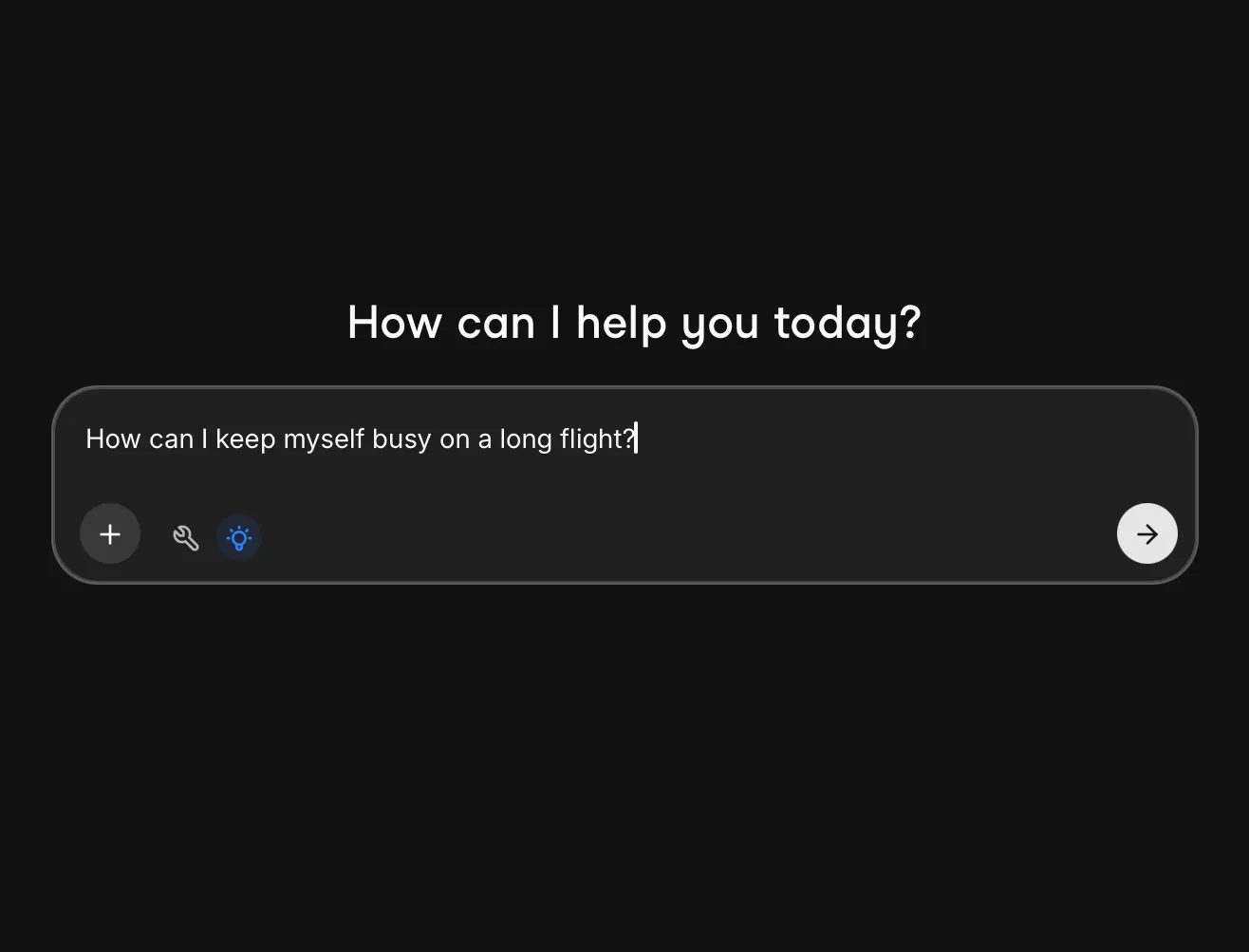
The model runs on your own Mac, and it keeps working offline with no limit on how much you ask.
Built on MLX
MLX is Apple's machine learning framework, built for the unified memory in M-series chips. The CPU, GPU and Neural Engine all read the same memory, so nothing has to be shuffled between the processor and a separate graphics card.
How TurboQuant works on Apple Silicon
TurboQuant changes how much context fits, so you can raise that window without adding RAM.
Context eats the memory
The cache grows with every message and on a long conversation it can end up bigger than the model itself.
Step 1
We compress that cache
Our build stores that cache in 3 or 4 bits instead of the usual 16. That makes it up to 4.3x smaller.
Step 2
What changes on your Mac
You can chat for longer before memory runs out, and still keep Xcode and Chrome open while the model runs.
Step 3
Atomic Chat vs Local LLM tools
Atomic Chat is the only one of these you can run on all five platforms.
OS


macOS
Google Play
Learn more in our blog

How to Run an LLM Locally
Pick a model for your hardware, understand quantization, and set it up in a few clicks.

Best Local LLM Apps in 2026
The 10 best local LLM apps compared on interface, platform reach, openness and tool support.

How to Run DeepSeek Locally
Run DeepSeek R1 offline: which distilled sizes fit your hardware, and the step-by-step setup.
FAQ
What people ask before running a local LLM on a Mac.
Yes. An M-series Air handles 7B and 8B models on 8GB, and a 16GB Air is comfortable with 14B. It's fanless, so a long generation will warm it up and slow down a bit, but it works.
At 4-bit, roughly 8GB for 8B models, 16GB for 14B, 32GB for 32B, and 64GB and up for 70B. Unified memory is shared with the rest of macOS, so leave headroom for whatever else you have open.
Not on raw speed. A dedicated NVIDIA card wins on tokens per second. Apple Silicon wins on capacity: unified memory means a 64GB Mac loads models that would need a very expensive GPU to fit at all.
Yes. Atomic Chat supports Intel and Apple Silicon Macs running macOS 13.6 or newer.
Yes. Drop in a contract, a bank statement or a spreadsheet and ask about it. Reading and analysis happen on your Mac, so the file is never uploaded or logged.
For code on a Mac, Qwen 3.5 and the DeepSeek distills are the two most people land on. Both explain functions, hunt bugs and refactor proprietary code without any of it leaving the machine, which is the whole point when an NDA rules out the cloud.
Yes. There's a local OpenAI-compatible endpoint on macOS. Point Kilo Code, Cline or any OpenAI SDK at it, with no API key and no per-token billing.
No. It installs from a .dmg like any other Mac app: drag it to Applications and open it. There is no command line step, no package manager and no account to create.
Completely. Nothing is sent to a server, no account is required, and nothing is logged in the cloud. Your chats sit on your own disk.
Small ones, yes. Atomic Chat is on the App Store and Google Play, so you can keep a compact model on your phone and chat in airplane mode.
Subscribe to our newsletter
Get Atomic updates and local AI news in your inbox.
.svg)


